
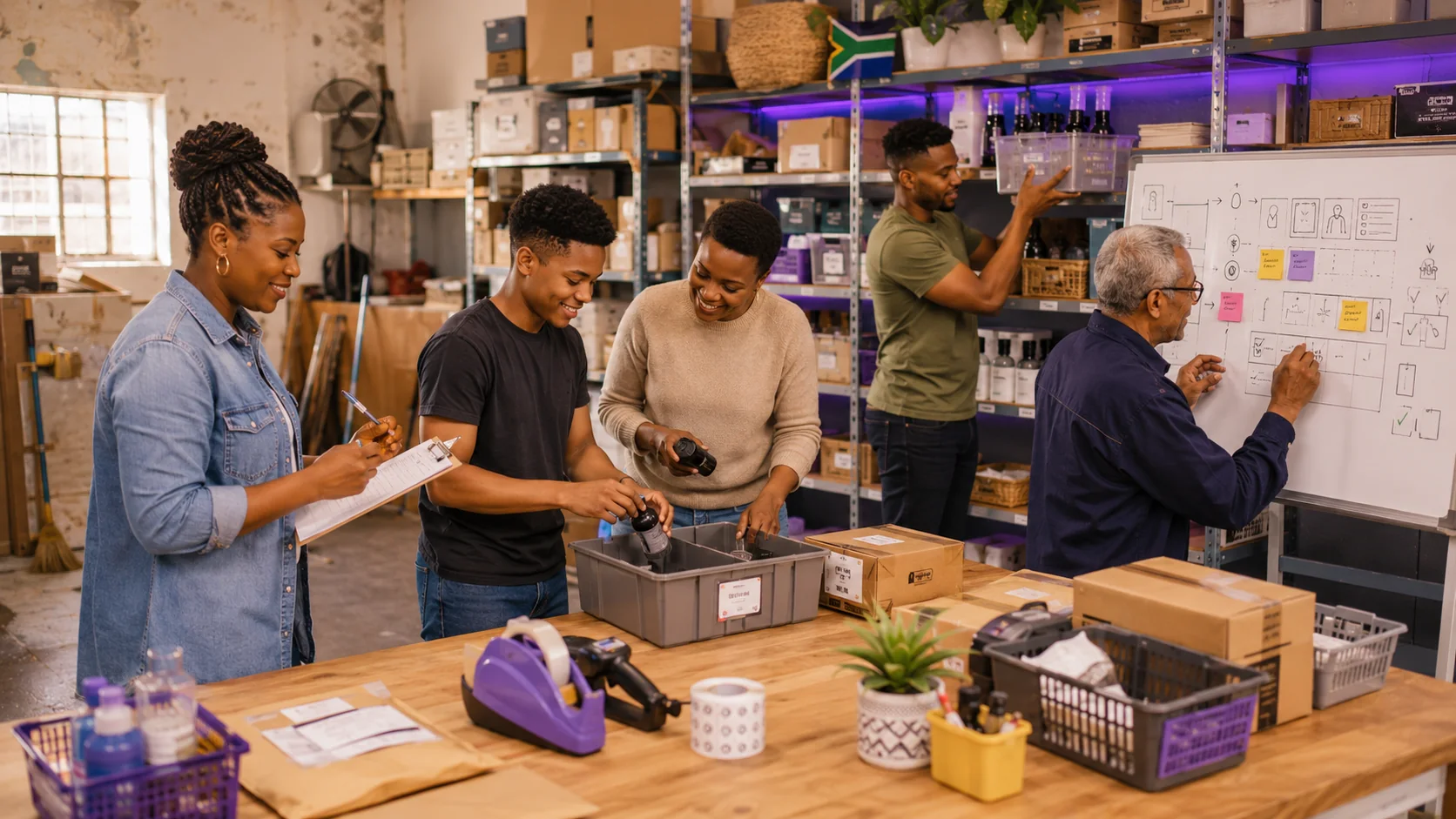
Does your small-business storeroom deserve its own documentary?
You open the door and immediately understand that history happened there. Old packaging samples. Half-used tape. Mystery cables. Supplier brochures from three years ago. Stock that might be current, discontinued, damaged, gifted, cursed, or waiting for someone brave enough to ask for it. Somewhere in the back, behind a box labelled “miscellaneous”, lies one roll of labels everyone has been looking for since March.
On the surface the business is hustling, showing mad skills, aura farming, and making inroads.
Orders go out. Customers get helped. People make a plan. Someone always seems to know where the thing is, although the explanation usually begins with, “It should be under the other thing next to the blue thing.”
This is charming until it becomes expensive. Because mess is not always dust and dirt. Sometimes mess is delay. Sometimes it is rework, wrong stock, duplicated buying, wasted time, missed checks, slow handovers, and tired people spending ten minutes searching for something that should have taken ten seconds to find.
Use this article when the stockroom, shared drive, packing table or sample shelf keeps hiding problems until they cost you time, money or customer trust.
This is why 5S belongs inside Amazon’s Leadership Principle of Insisting on the Highest Standards.
This principle is not only about aiming high when the customer is watching. It is about building products, services and processes that hold the bar consistently. It asks businesses to prevent defects from moving down the line and to fix problems so they stay fixed. That is hard to do when the workplace itself hides the problem until it has already become urgent.
5S is a Lean tool that helps make work visible, orderly and repeatable. It is simple enough to understand and irritatingly powerful once you actually use it.
The five steps are: Sort. Set in order. Shine. Standardise. Sustain.
The point is not neatness for neatness’ sake. The point is that high standards need somewhere to live.
Not glamorous. Not mystical. 5S is the discipline of creating an environment where people can do good work without needing memory, luck, or a treasure map.
In a factory, 5S might be used on a production floor. In a South African small business, it might apply to a stockroom, packing table, office drawer, laptop folder, shared drive, booking process, customer message templates, invoice system, sample shelf, or garage that has quietly become a warehouse with Wi-Fi.
Frankly, the list can become endless once you start looking properly. The point is not neatness for neatness’ sake. The point is that high standards need somewhere to live.
Start with Sort
Sorting asks what belongs in the work and what is just taking up space, attention and money. This is where businesses face the drawer of shame. Old stock. Dead templates. Duplicate files. Supplier samples no one uses. Packaging that does not fit anything. Promo material for a product line that has already gone to live on a farm.
Sorting is not about throwing away history. It is about separating what supports the current standard from what confuses it.
For an entrepreneur, this matters because clutter creates false confidence. You think you have stock because the shelf looks full. You think you have packaging because there are boxes everywhere. You think the team has resources because the shared folder has forty-seven versions of the same document, each named “final”, “final final”, and “use this one”.
A high-standard business cannot rely on visual noise. It needs truth. What is usable? What is current? What is damaged? What is obsolete? What is waiting for a decision?
If the workspace cannot answer those questions quickly, it is already costing you.
Then comes Set in order
This is the step that says every useful thing needs a sensible home. Not an emotional home. Not “somewhere by the window”. A real home.
The item used daily should not live behind the item used twice a year. The returns notebook should not migrate like a seasonal bird. The newest price list should not be hiding in someone’s inbox under the subject line “quick update”. The spare charger for the card machine should not require a US Marshal to rally the team in a search party.
Set in order is where the work starts becoming kinder.
People should be able to find what they need without interrupting three other people. A new employee should be able to understand the layout without decoding the owner’s life story. A busy team should be able to move with confidence because the setup is helping, not heckling.
This is where labels, visual guides, shelf zones, naming conventions, shared folder rules and simple layout choices become quality tools. They are not admin decorations. They are small agreements that protect time, reduce confusion and make the standard easier to follow.
Next, make it Shine
This does not mean polishing the table until it reflects your unresolved childhood ambitions. It means cleaning, checking and maintaining the work area so problems become visible.
In a stockroom, Shine might reveal damaged packaging, leaking product, expired stock, missing labels, dust, poor storage or pests trying to enter the supply chain with criminal intent. In a digital workspace, Shine might mean clearing duplicate files, archiving old templates, reviewing broken links, updating saved responses, and removing instructions that no longer match the real process.
Shine is my favourite superpower because mess hides defects.
A clean packing table shows what is missing. An organised inbox shows what is overdue. A tidy stock shelf shows what needs replenishment. A maintained machine shows when something sounds wrong. A clear shared drive shows which version is current.
You cannot insist on high standards if the operating space keeps smuggling problems past you in a trench coat.
Then we reach for Standardise
This is where many businesses can wobble. They clean up once, feel powerful for three days, take a photo, maybe even post it in the team chat with a tiny crown emoji, and then slowly return to the old swamp habits.
Standardise asks: how do we make the better way normal?
This could mean a Friday stock check. A daily packing reset. A naming rule for files. A visual checklist for closing the workspace. A clear shelf map. A monthly review of old templates. A simple rule that damaged stock never sits with sellable stock. A shared understanding of what “ready to send” looks like.
Standardising does not need to be complicated. In fact, if it is too complicated, it will quietly be forgotten and die of neglect.
The best standard is the one people can actually follow on a busy Tuesday when the courier is early, the customer is impatient, the supplier is vague, and someone has just asked where the tape went.
Finally, Sustain
This is the step that separates a real operating discipline from a cleaning mood.
Sustain asks how the habit survives once the novelty fades. Who checks it? How often? What happens when it slips? How do new people learn it? How does the business adapt the system when the work changes? This is where 5S becomes a leadership practice.
If the owner cleans everything personally but never builds the rhythm, the business has not improved. It has had a tidy weekend. If the team organises the stockroom but no one owns the reset, the shelves will slowly begin plotting rebellion. If the shared drive is cleaned once but no naming convention exists, the “final final” files will return with cousins.
Sustain means the business decides that order is not a once-off event. It is part of how the standard stays alive.
Why this matters to customers and teams
This matters beyond retail. A guesthouse can use 5S for linen rooms, maintenance supplies, booking handovers and guest communication templates. A small manufacturer can use it for tools, raw materials, safety checks and batch records. A service business can use it for contracts, client notes, proposals, onboarding documents and follow-up routines.
Different industries. Same principle. When the setup is unclear, the work becomes harder than it needs to be. When the work becomes harder, people improvise. When people improvise under pressure, variation creeps in. When variation creeps in, the customer eventually feels it.
Not always as “the stockroom is messy”. They feel it as delay. Confusion. Wrong information. Missed follow-up. Inconsistent quality. A team that sounds unsure. A promise that does not land as cleanly as it should.
That is the hidden link between 5S and customer experience.
Customers do not care how tidy your workspace is. They care whether the result feels reliable. 5S helps create the conditions for that reliability.
It also protects people. A cluttered operation makes everyone carry invisible load. They must remember where things are, chase missing items, search old messages, fix preventable errors, and explain delays caused by disorder no customer ever asked for. Over time, that creates irritation, fatigue and a quiet lowering of the bar.
A clearer operating space gives the team back energy.
It helps the young hire learn faster. It helps the experienced worker stop being the only map. It helps the owner step away without the business losing its shoes. It makes quality less dependent on who happens to be working that day.
That is why 5S is not about being neat. It is about being ready.
Ready to pack correctly. Ready to answer clearly. Ready to train fairly. Ready to find the right version. Ready to notice when something is wrong. Ready to deliver the standard you keep promising in public.
5S helps you build the daily environment where those standards can survive real life. Because high standards are not maintained by speeches. They are maintained by the shelf, the label, the checklist, the reset, the rhythm, and the team knowing exactly where the tape lives.
A business does not need to become sterile to become reliable. It just needs to stop making quality climb over clutter to do its job. The goal is not perfection. The goal is a workspace that helps people keep the promise.
Practical take-away
Where in your business is clutter quietly lowering the standard? And what would change if your workspace made the right way easier to follow?
Start with one place. One shelf. One drawer. One shared folder. One packing table. One booking flow. Sort what belongs, give useful things a home, clean what hides defects, standardise the better way, and decide how the habit will be sustained.
Do not wait for the next delay, the next missing item or the next tired search party before you treat the setup as part of the standard.
This is a personal thought piece, written from my own customer experience and process improvement perspective. It draws on publicly available information and reflects my own views.