
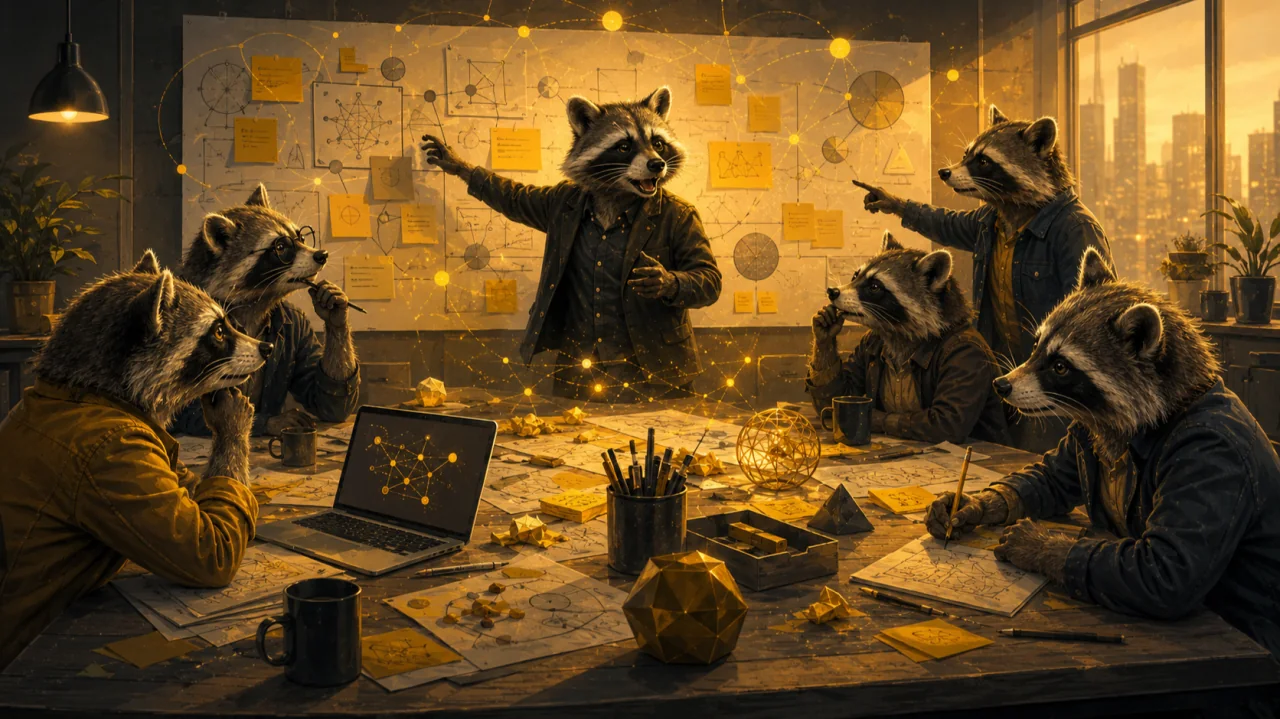
Picture this. You walked into a meeting where the problem was so serious that everyone seemed to believe the only respectful response was to become less human?
The room changes before anyone speaks. Voices lower. Faces tighten. Someone opens a deck with the emotional warmth of a tax audit. The agenda looks disciplined, the risk language arrives early, and within minutes the whole room starts behaving as if creativity might be inappropriate for the occasion.
Nobody says this directly, of course. Nobody stands up and announces, “Because this matter is important, we will now remove play, humour, curiosity, and any visible signs of oxygen from the conversation.”
But the message is there. The work is serious. So the room must become heavy. And I think that may be one of the strangest traps in modern work.
Use this field note when the room has confused seriousness with solemnity and everyone is acting as though oxygen might compromise governance.
The Seriousness Trap Has Excellent Posture
Somewhere along the way, we confused serious work with sombre work. We began to believe that if something matters, it must be approached with stiffness. If the stakes are high, the language must become abstract. If the customer issue is painful, the team must stop joking. If the operational problem has been around for months, the room must perform concern in the correct corporate dialect.
But seriousness is not a facial expression. Seriousness is not the absence of laughter. It is not a meeting where everyone sits upright and says “governance” three times before breakfast. Real seriousness is commitment. It is the willingness to look properly at the problem. To stay with it when it becomes uncomfortable. To name what is true. To resist easy answers. To care enough about the outcome that you do not let fear, ego, or theatre take over the work.
A miserable room is not automatically a serious room. Sometimes it is just a room where everyone has mistaken emotional stiffness for discipline.
When the Work Matters, We Often Close Too Soon
This is where the pattern connects to everything we have been exploring in this series. When work feels important, organisations often move into closed mode too quickly. They want certainty. Action. Ownership. Timelines. Decisions. The machinery starts humming before the thinking has had a proper chance to stretch.
This makes sense at one level. Serious problems often need action. Customers are waiting. Teams are tired. Leaders need answers. Nobody wants to sit around gently admiring the complexity while the queue catches fire.
But the danger is that urgency can become a thought-shortener. The room starts asking, “What are we doing about it?” before it has asked, “What are we actually seeing?” It asks, “Who owns this?” before it asks, “Why does this keep happening?” It asks, “What is the action plan?” before it asks, “What assumption are we about to scale?” That is not discipline. That is anxiety dressed as momentum. And it can produce a very polished kind of wrong.
Play Is Not Disrespectful to the Problem
One of the reasons play gets pushed out of serious work is that people misunderstand what play is. They hear “play” and imagine frivolity. Noise. Games. Someone with a marker asking adults to invent a team animal while the real issue sits in the corner quietly ageing. But play, in the sense we have been exploring, is not silliness. I think it is cognitive looseness.
Serious work does not become stronger by becoming joyless. It becomes stronger when people can stay alert, human, and honest while doing it.
It is the ability to move ideas around before defending one arrangement. It is the permission to ask the odd question, try the awkward analogy, challenge the obvious answer, and let the first version of a thought appear without immediately dragging it under the fluorescent lights for formal inspection.
Play is how the mind tests possibility. It does not make the work less serious. It often makes the work more honest. When a room has no play in it, people tend to protect themselves. They say the safer thing. They produce the expected answer. They perform competence. They avoid the sentence that might make the room pause. But the sentence that makes the room pause may be exactly where the useful work begins.
The Corporate Funeral for a Problem That Needed a Playground
You can see the seriousness trap in improvement work all the time. A Kaizen begins with energy, but quickly becomes a procession of templates. A Gemba walk turns into a guided tour where everyone knows which corners not to look at too closely. A Working Backwards review becomes less about discovery and more about defending the preferred future in better formatting.
The tools are not the villain. The mood is. A method can be rigorous and alive. It can give structure to curiosity. It can help a team move from confusion to clarity without pretending the first answer is the final one. But when the atmosphere becomes too heavy, the method loses its pulse.
Six Sigma becomes a punishment ritual for variation. Root cause analysis becomes a blame séance with fishbones. Brainstorming becomes a polite parade of ideas that already know how to behave. Customer-backwards thinking becomes a document that says “customer” often enough to sound sincere while quietly protecting the organisation from the customer’s actual experience.
This is what happens when we keep the ceremony and lose the play. The room looks professional. The thinking goes missing.
Humour Can Be a Diagnostic Tool
Humour is often treated as a decorative extra in the workplace, something tolerated if the real work is already under control. But humour can reveal truth with surprising precision.
A joke can name what everyone knows but nobody has felt safe enough to say. A funny metaphor can bypass defensiveness long enough for a hard point to land. A ridiculous image, such as a raccoon assembling a PowerPoint with unresolved feelings about alignment, can help a team admit that the first draft is messy without shaming the person who made it.
Humour lowers the temperature without lowering the standard. That matters. Because many serious rooms are too hot for honesty. Not loud-hot, necessarily. Sometimes they are silent-hot. The kind of room where everyone can feel the tension, but nobody wants to be the one who disturbs the official version of events. A small amount of humour can create enough air for truth to move.
Not every joke belongs in every room. Timing matters. Taste matters. Power matters. A leader’s joke can open a room, or it can flatten it. Humour should never be used to dismiss pain, mock people, or avoid accountability. But when used with care, humour can help the room become human enough to think.
Gravitas Is Not the Same as Wisdom
Some people carry seriousness very well. They speak slowly. They look thoughtful. They use phrases like “strategic implications” and “governance framework” in a way that makes the furniture sit up straighter.
Yes sometimes, they are wise. Sometimes, they are just fluent in importance. This is dangerous because organisations often mistake gravitas for judgement. The person who sounds weighty is assumed to be thinking deeply. The person who uses humour, metaphor, or play is sometimes treated as less serious, even when they are the one seeing the system most clearly.
But wisdom is not always solemn. Some of the sharpest thinkers I have met were funny because they could see patterns quickly. They could hold contradiction without panicking. They could make an idea memorable. They could puncture inflated nonsense before it became policy.
A playful mind is not an unserious mind. It is often a mind still flexible enough to notice what rigid thinking misses.
The Frontline Knows the Difference Between Serious and Stiff
Frontline teams understand this instinctively. They do serious work every day. They calm angry customers. Translate broken policies into survivable conversations. Or they spot patterns before dashboards develop the confidence to admit them. They deal with the emotional consequences of decisions made far away by people with cleaner calendars. And yet, frontline teams often survive through humour.
Not because the work is light. Because the work is heavy. A shared joke after a brutal call. A nickname for the system glitch that keeps returning like a haunted toaster. A darkly funny comment about the policy that makes no sense to anyone outside the building. These are not signs that people do not care.
Often, they are signs that people are still trying to stay alive inside the work. Humour becomes pressure release. Pattern recognition. Social bonding. Emotional oxygen. When leaders misunderstand that, they risk sanitising the very thing that keeps the team human.
The issue is not whether people laugh. The issue is whether the laughter is a bridge to truth or a hiding place from it.
The Problem With Joyless Improvement
A joyless improvement culture is a strange creature. It talks about innovation, but every meeting feels like a compliance inspection. It wants ideas, but only after they have passed through six filters of acceptability. It praises curiosity, but gets twitchy when someone asks a question that points upstream. It celebrates learning, but treats mistakes as small reputational crimes.
That culture may still improve things. But it will mostly improve within the existing imagination of the system. It will make the queue faster, but not ask whether the queue should exist. Polish the script, but not ask whether the script is covering a design failure. It will reduce defects, but not ask what the defect is trying to teach.
Play matters because it allows teams to step outside the current frame. It lets the room ask, “What else might be true?” without needing to prove it immediately. It lets people imagine before they justify. It lets the work breathe before the governance machine starts asking for shoes and identification.
Without that, improvement becomes maintenance with better stationery.
AI Will Not Rescue a Joyless Thinking Culture
This matters even more now because AI can make serious work look even more serious. It can produce the summary. Draft the roadmap. Generate the options. Organise the meeting notes. Cluster the themes. Polish the language until the whole thing looks unnervingly competent.
Useful? Absolutely. But if the room itself is closed, fearful, or joyless, AI may simply help it become more efficient at avoiding the real question.
That is why human conditions still matter. The quality of the room matters. The permission to play matters. The courage to ask strange questions matters. The willingness to sit in uncertainty matters. The ability to laugh without trivialising the work matters.
Permission Is Not the Opposite of Discipline
A common fear is that if we allow more play, humour, or looseness into serious work, discipline will collapse and everyone will wander off into a meadow of opinions.
But permission and discipline are not enemies. The best creative work often needs both. A container. A purpose. A time boundary. A shared problem. A commitment to return from exploration with something useful. That is not chaos. That is designed openness.
The problem is not that organisations are too disciplined. It is that they often apply discipline at the wrong moment. They demand polished answers during exploration. They evaluate ideas before the room has generated enough of them. They ask for risk assessment before possibility has even stood up. They close the door while the thought is still finding its coat.
A better rhythm is possible. Open first. Explore properly. Let the strange thought appear. Let people connect things that do not obviously belong together. Let the room loosen enough to see. Then close. Decide. Prioritise. Test. Measure. Learn. Sustain. That is not unserious. That is better sequencing.
The Room Does Not Need to Become a Circus
Let us be very clear. Serious work does not require forced fun. Nobody needs another workshop where adults are emotionally ambushed by an icebreaker involving animal noises, childhood dreams, or a ball of wool that somehow represents trust. We have all suffered enough. This is not about making work artificially cheerful.
It is about making work human enough for original thinking to survive. Sometimes that means laughter. Or it means a strange metaphor. A quiet pause. Sometimes it means letting someone say, “This may be nonsense, but what if…” without treating them like they have contaminated the meeting. It means allowing the team to admit, with affection and accuracy, that the first draft is a raccoon draft. The goal is not entertainment. The goal is aliveness.
A room that is alive can notice. It can adapt. It can question itself. It can recover. It can tell the truth sooner. A room that is merely solemn may look respectable while walking straight past the clue.
What Leaders Can Notice
Leaders do not need to become comedians, facilitators with tambourines, or professional cheer captains. But they do need to notice the emotional weather of the room. Does the room become smaller when the stakes rise? Do people stop offering half-thoughts? Does humour disappear because the work matters, or because people are afraid? Are questions treated as delays? Does the first acceptable answer become the final answer because everyone wants relief? Are improvement tools being used to explore reality, or to legitimise a decision already made?
These signals matter because culture is often visible in the way a room responds to uncertainty. If uncertainty produces curiosity, the culture has oxygen. If uncertainty produces stiffness, silence, or premature closure, the culture may be mistaking control for competence.
A Different Kind of Serious
Perhaps the next evolution of serious work is not more weight. Perhaps it is more range. The ability to move between modes. To be rigorous without becoming rigid. To be playful without becoming careless. To be urgent without becoming shallow. To be human without losing discipline.
That kind of seriousness is harder than corporate solemnity. It asks more of us. It asks us to care deeply without clutching the problem so tightly that no new thought can breathe. To make space for the awkward idea, the uncomfortable pattern, the unfinished observation, and the joke that reveals the truth without bruising the room. And to stop confusing a heavy atmosphere with a high standard.
The Question to Take Into the Next Serious Room
So the next time the work feels serious, watch what happens to the room. Does it become more honest, or merely more formal? Does it create space for better thinking, or does it rush toward the safety of a familiar answer? Does it allow people to care deeply without becoming joyless? Because serious work does not need to look miserable. It needs to look alive.
And perhaps the next time you walk into a high-stakes meeting, Kaizen, Gemba conversation, strategy review, customer recovery session, or improvement workshop, you could ask a different question. Not, “How do we make this room more serious?” But, “How do we make this room safe enough, open enough, and human enough to think properly?”
Do you think that might change what the room is brave enough to see?
This is a personal thought piece, written in my private capacity from my own customer experience and process improvement perspective. It draws on publicly available information and reflects my own views, not the views of my employer. It does not discuss or rely on confidential company information.