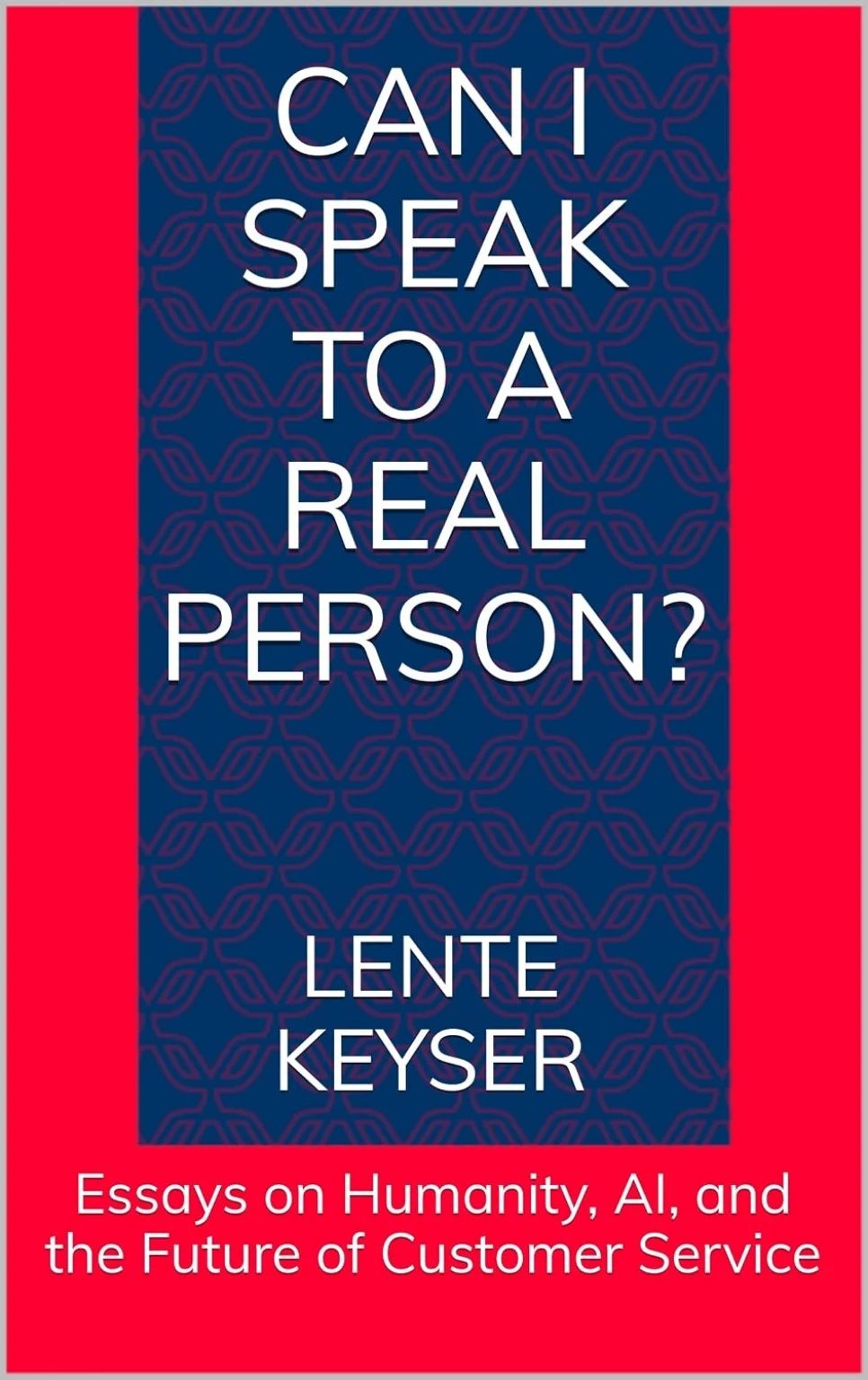
The contact is a clue, not merely a cost
Try cancelling a subscription, changing a flight or reporting a double debit. You learn more about a company during that attempt than from its promises about caring for customers. If the route is clear, the answer honest and the handover sensible, the organisation has done some real work. If every path leads back to “Press 3 for disappointment”, the marketing copy cannot rescue it.
Customers rarely contact support because they fancy another conversation with a business. Something has failed, confused them or frightened them. The visible request might be for a refund or a status update. Underneath it may be a question about whether the company remembers what it promised and whether anyone will take this particular problem seriously. That is why a technically correct answer can still leave a person unsettled.
There is a less obvious reading of “Can I speak to a real person?” in the opening essay. Sometimes the customer is still hoping that somebody inside the company can help. Treating the request only as unwanted demand wastes that remaining trust.
The book crosses different kinds of service to make this point. A hotel guest might remember the person who noticed they were anxious before they asked for help. A technical customer may need the error explained without feeling foolish. Someone seeking guidance on a serious matter may need clarity and caution at the same time. Good service does not look identical in every setting. In each, the organisation must decide whether its process allows the person’s actual need to appear.
Lente describes a triangle of intent: the customer seeks reassurance, the frontline worker needs clarity and agency, and the business wants efficiency and loyalty. An interaction can satisfy a process for one corner while disappointing the other two. Seeing the triangle helps explain why a quick resolution, a grateful customer and a sustainable job are related but not interchangeable outcomes.
Contact volume is useful operational information, but a falling number is ambiguous. People may have solved their problems themselves. They may also have given up trying. Self-service can give someone welcome control; it becomes lonely when the twelfth help article still does not answer the question and there is no sensible way out. Before celebrating fewer contacts, ask what brought people to the door and what happened when they stopped knocking.
Customer service holds the company to its promises
The book asks why a company needs a customer service department in the first place. The unsentimental answer is that products, policies and promises do not always survive contact with reality. Someone must meet the person affected when the parcel disappears, the promotion misleads or the procedure does not fit. For years that someone has been expected to apologise beautifully and move to the next case.
A goodwill voucher may be exactly the right thing for a customer who has lost time or money. It cannot, by itself, stop the next customer meeting the same fault. When the organisation treats the voucher and a polite closure as the whole solution, the frontline becomes a very capable bandage over a leak that nobody owns. The customer leaves with compensation. The cause stays in production.
That is why Lente calls service a credibility function. The people who hear problems first can connect the company’s promises to the customer’s actual experience. They see which policies create friction, which instructions fail, and which “isolated incidents” have the same shape every Tuesday. Their insight is useful only if someone beyond the queue can act on it. Asking an agent to absorb the complaint without giving the organisation a route to change it is a strange way to say the customer is at the centre.
The book’s proposed shift is from appeasement to learning. Preserve the story behind a complaint, look for recurrence, give an owner the authority to change the cause, and notice whether it recurs. A repaired system may make the next heartfelt apology unnecessary. That is a quieter achievement than rescuing one angry caller, and probably a more generous one.
A chatbot shows what the company believes service is for
Lente is plainly familiar with Chatbot Hell. You type that you want to cancel an order; the bot congratulates you on your purchase. You try again, and it offers a survey. The joke lands because the failure is recognisable. It does not follow that every chatbot is a villain. A clear, quick answer to a routine question can spare both customer and agent an unnecessary wait.
The deeper problem is intent. A bot designed to answer the question, remember the failed steps and hand over a complicated case can be helpful. One designed primarily to keep contacts away from humans will make the same wrong turn very efficiently. It inherits the scripts, policies and assumptions its makers give it. A machine that quotes a rule without grasping why the rule exists may be a faithful copy of the human service model that came before it.
The collection is more hopeful about AI than a simple “keep the humans” slogan. It imagines tools that translate jargon, preserve context across handovers, surface repeating problems and help agents notice when a stock phrase will sound cold. It also asks for permission and judgement when service becomes predictive: an early warning about a delayed delivery may feel thoughtful; an unsolicited intervention based on what a company inferred about your mood may feel intrusive. Knowing something may go wrong is not the same as having earned the right to intervene.
Human involvement is therefore more than an emergency exit button labelled agent. People with frontline experience should help design the conversation, test it aloud and decide when the tool needs to step aside. The point is not to make the bot impersonate a friend. It is to let technology handle work it can do well while keeping responsibility for care, fairness and exceptions visible.
Humanity needs boundaries on both sides of the conversation
There is a deliciously awkward turn in the essay on customer entitlement. The person demanding a “real human” may also be the person treating that human like an emotional punching bag. A purchase creates a right to fair service. It does not purchase another person’s dignity. Angry customers can have valid complaints; threats, harassment and humiliation are still not a service requirement.
On the other side, organisations often ask employees to sound endlessly warm while giving them little authority to solve the problem. Lente describes the professional persona she built: patient, composed, apparently unshakeable, with an inner voice that is sometimes considerably less serene. She recounts a call that ended with thanks while her hands still shook. The mask can help someone do difficult work. Forgetting that it is a mask makes its cost easier for everybody else to overlook.
The book connects that cost to the quiet worker who stops contributing. In an essay on the freeze response, Lente describes how resignation can look like calm competence from a distance. What looks like composure may be practiced skill, and it may be withdrawal after too many hostile or futile encounters. We cannot diagnose a person from a silent meeting or a measured voice. We can ask whether the organisation has made it safe to report strain, end abusive contact appropriately, and speak honestly about what cannot be fixed. Authenticity does not require an agent to reveal everything they feel. It allows them to tell the truth without performing an impossible cheerfulness.
De-escalation and the “Trustbuilder Instinct” matter here. Lente jokes that she was born with a flamethrower rather than a poker face. Her point is that staying curious when you feel defensive can open a conversation that an argument would close. It takes skill to hear a customer’s fear beneath their accusation. It also takes leadership to protect that skill from being treated as an unlimited resource. Respect must run in both directions. A service boundary should preserve access to help while making it clear that abuse of a worker is unacceptable.
The dashboard is telling the truth, but perhaps not the whole truth
The QA joke begins with a proud green dashboard and a less triumphant reality outside the meeting room. Handle time falls. A required phrase is spoken. The case is closed. Those measures tell us something useful about volume, consistency and process. They cannot, on their own, show whether the customer understood the answer, whether the issue will return or whether the agent noticed a flaw worth fixing.
If an agent is praised for closing an interaction before exploring the recurring cause, the scorecard has taught a lesson. If a goodwill gesture earns a good sentiment score while the broken promotion remains live, the business may congratulate itself on solving a problem it has merely postponed. The book’s question is less “Which number should replace the old number?” than “What do our measures make easy to see, and what do they train us to ignore?”
The essays push towards quality intelligence: look at a sample of actual conversations, customer journeys and repeated patterns alongside operational figures. Ask what the customer was trying to do and where the process failed them. Listen to the frontline’s explanation before calling a surprising result poor performance. A story is not automatically evidence of a general pattern, just as a green average is not proof that no one was hurt. The useful work is to put them in conversation and follow up on what they suggest.
AI may help find similar contacts or summarise thousands of interactions. It can also make an incomplete measure look impressively precise. If the organisation uses it to score whether someone sounded empathetic, it may reward polished phrasing while overlooking whether the answer was honest and helpful. More sophisticated observation is valuable only if the company has decided what it wants to learn.
Curiosity turns frontline stories into decisions
The book offers a small but telling customer-service moment: an agent dealing with an angry customer asks whether she has understood what happened from his side. His story changes shape. The question works because she is seeking information, not collecting a polite pause before delivering a prepared defence. Lente calls this strategic curiosity, and it applies well beyond the single call.
Another essay describes an agent, Keira, who keeps seeing complaints about a loyalty promotion. The reports say the incidents are isolated. Keira notices that the affected customers used the same browser version and saw different wording on a banner. Her account of one customer and the larger pattern, the essay says, prompted a fix within a week. The point is not that an anecdote should overrule all the data. It is that the pattern was invisible until someone close to the conversations asked a better question. The frontline story gave the organisation something testable.
Customer service becomes strategic when those observations can travel. An agent needs to be able to describe what happened without reducing it to a ticket category. A team needs to compare cases and check whether the pattern holds. Someone with authority needs to fix the banner, policy or handover, then see whether the experience changes. Without that last step, “voice of the customer” is merely a prettier name for a folder nobody opens.
This is also why the book spends time on storytelling. The strongest story does more than cast the agent as a hero or the customer as difficult. It connects a person’s experience, the evidence available, the design choice behind it and a decision the organisation can make. Curiosity prevents a premature verdict; narrative helps the finding survive its journey upward. Together they let a conversation become more than another closed case.
The future frontliner needs authority as well as empathy
As routine queries move to self-service, the cases reaching people are often the ones a flowchart could not settle. The book sees an opportunity in that change. Frontliners could become customer insight analysts, trust specialists or partners in designing the AI that serves their customers. But a new title will not do the work if the person is still permitted only to repeat a script and apologise for decisions made elsewhere.
Lente asks organisations to hire for curiosity and courage, train for discernment, and create career paths for skilled individual contributors. These are not qualities that flourish automatically under a live stopwatch. People need access to the facts, room to question an output, sensible escalation routes and a way for the patterns they notice to reach someone who can act. When the blueprint breaks, strategic grit means adapting with purpose rather than obediently running the broken plan for another quarter. “We will fix it in Phase Two” has a shelf life.
Radical accountability belongs with the decision-makers too. A frontline worker can own a mistake they made; they cannot own every promise marketing made or every policy leadership refuses to revisit. A leader who says “This is on me” and changes the underlying problem offers more than another meeting about shared ownership. The book’s future is a partnership between people who notice, people who can decide and technology designed to support both.
The collection closes by widening the frame. Every bot flow, hiring decision, measure and service boundary answers a question about what kind of workplace and customer relationship the organisation intends to build. Those choices teach people whether a human voice is valued only at the moment a customer demands one, or throughout the design of the service itself.
The question the book leaves with us
When someone asks, “Can I speak to a real person?”, giving them a human on a chat can be the right next step. It is not the whole answer if that person must follow an unhelpful script, absorb abuse without support or apologise for a recurring failure nobody will fix.
The book’s real question reaches into the design of the company: Can the people who hear the truth help change what keeps making customers ask?
A service organisation that can answer yes has done more than add a human handoff. It has given humanity somewhere to go after the conversation ends.